A First-Timer's Guide to the Cotswolds: Villages, Walks and Where to Eat
The Cotswolds cover a stretch of rolling limestone hill country across Gloucestershire, Oxfordshire, Wiltshire and parts of Worcestershire — an Area of Outstanding Natural Beauty built on wool money and, these days, on people driving out from London and Birmingham for a weekend of stone villages, proper pub lunches and walks that don't require any real planning. If it's your first visit, here's a genuinely useful starting point rather than a list of forty things you won't get to.
Why everything looks the same colour
Almost every building that makes the Cotswolds look like the Cotswolds is built from the same honey-coloured local limestone, quarried from the hills themselves. That uniformity isn't accidental — the wool trade that made this part of England wealthy in the medieval period paid for the churches, market halls and merchants' houses that still define villages like Chipping Campden, Burford and Painswick, and because the area stayed largely agricultural rather than industrial, a lot of that architecture simply never got knocked down and replaced. That's the short version of why it all looks so consistent, and so old.
Pick a base, don't try to see all of it
The Cotswolds are bigger than first-time visitors expect — well over two hours to drive end to end — so trying to loop through every well-known village in a single weekend usually means a lot of time in the car and not much time anywhere. Pick one or two market towns as a base and explore outward on foot or with short drives instead.
Moreton-in-Marsh and Stow-on-the-Wold are solid, central choices with good road links. Chipping Campden and Broadway sit further north, prettier arguably but a longer drive from the southern villages. Bourton-on-the-Water and Bibury are unmissable but also the busiest by some margin, particularly at weekends — worth an early-morning visit rather than a midday one if you'd rather see the village than the crowd.
Walking is genuinely the best way to see it
The Cotswolds reward walking more than almost anywhere else in England. The Cotswold Way, a 100-mile waymarked trail running the length of the escarpment, is the best-known route, but you don't need to attempt any of it in full — most villages have a two-to-four-mile circular walk that takes in a viewpoint, a section of drystone wall, and usually a pub at the halfway point, which is the correct way to structure a Cotswold walk. Ask locally or check an Ordnance Survey map for the nearest circular route rather than guessing from a village car park.
Food is a genuine strength, not just a pub with flowers outside
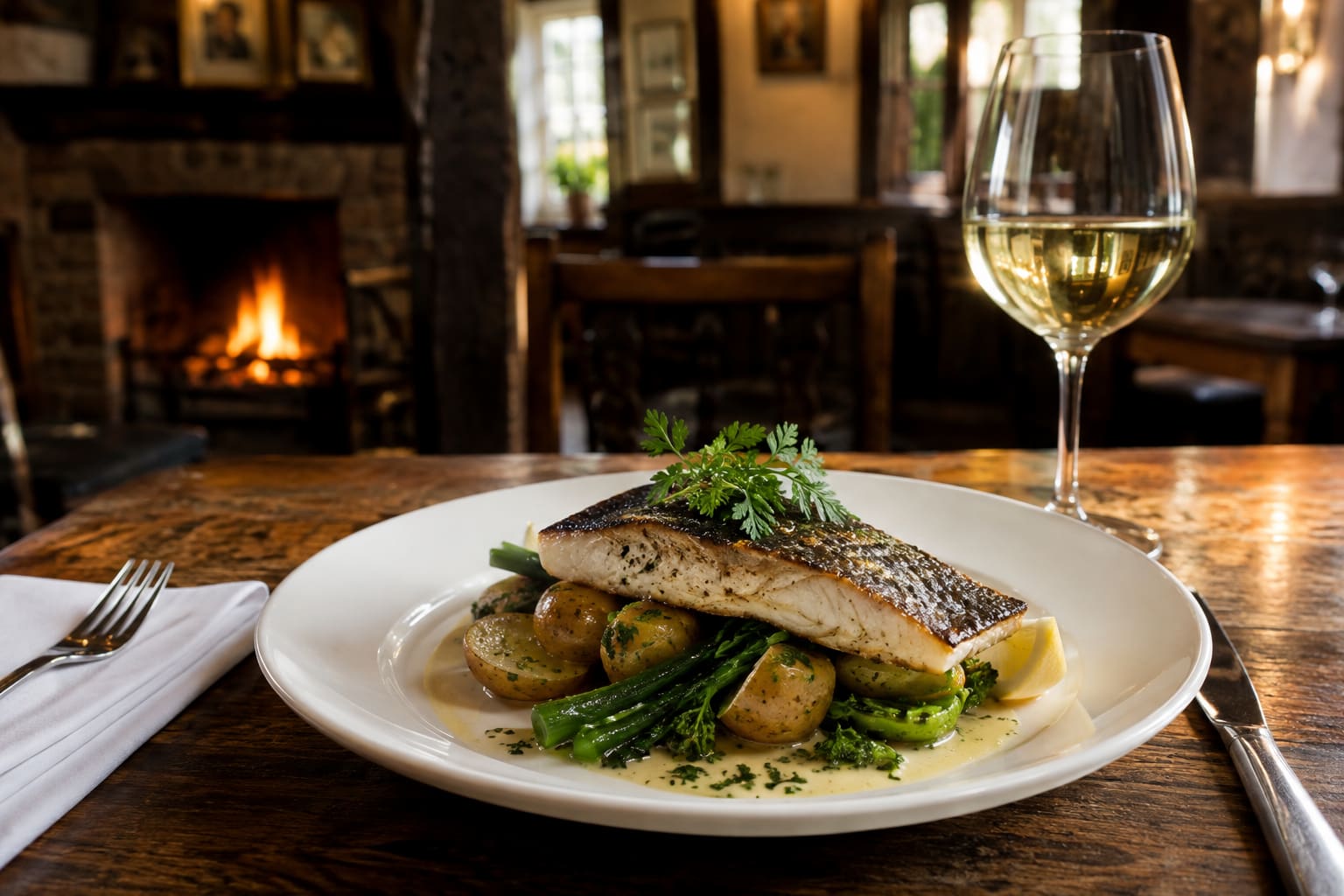
The stereotype of the picturesque Cotswold pub is accurate, but the food scene has moved well beyond it — proper farm shops with their own butchery and bakery, a strong network of local breweries, and a good number of pubs that take the kitchen as seriously as the beer garden. If you only do one food-related thing, make it a farm shop rather than a supermarket for anything you're cooking yourself; the quality difference is real and most have a café attached worth a stop regardless.
Things worth knowing before you go
A few practical points that catch first-time visitors out:
- Villages are small and popular ones fill their car parks by mid-morning in season — arrive early or plan to walk in from a short distance away.
- Public transport between villages is limited; a car (or a very well-planned bus/taxi combination) is close to essential.
- Mobile signal genuinely does drop out in some of the deeper valleys — download maps in advance if you're walking.
- Opening hours for smaller shops, cafés and attractions change with the seasons and sometimes at short notice — always worth a quick check online before you set off, rather than assuming.
Where to go from here
If you're staying somewhere in the area already, the best local knowledge usually comes from whoever's hosting you — a good host, or a well-written digital welcome guide, will point you toward the walks and pubs that are actually worth the detour rather than the ones that show up first in a search. That's a large part of what we build at Cotswold Host: not just Wi-Fi passwords and checkout times, but a genuinely useful local guide for each property, kept current, and available the moment a guest asks.
Either way — pick a base, walk more than you drive, and leave room in the itinerary for the pub you weren't planning on stopping at.
Curious what Cotswold Host would look like for your own property?
Book a free trial