Cutting Down on 11pm Guest Messages: A Practical Checklist for Cotswold Hosts
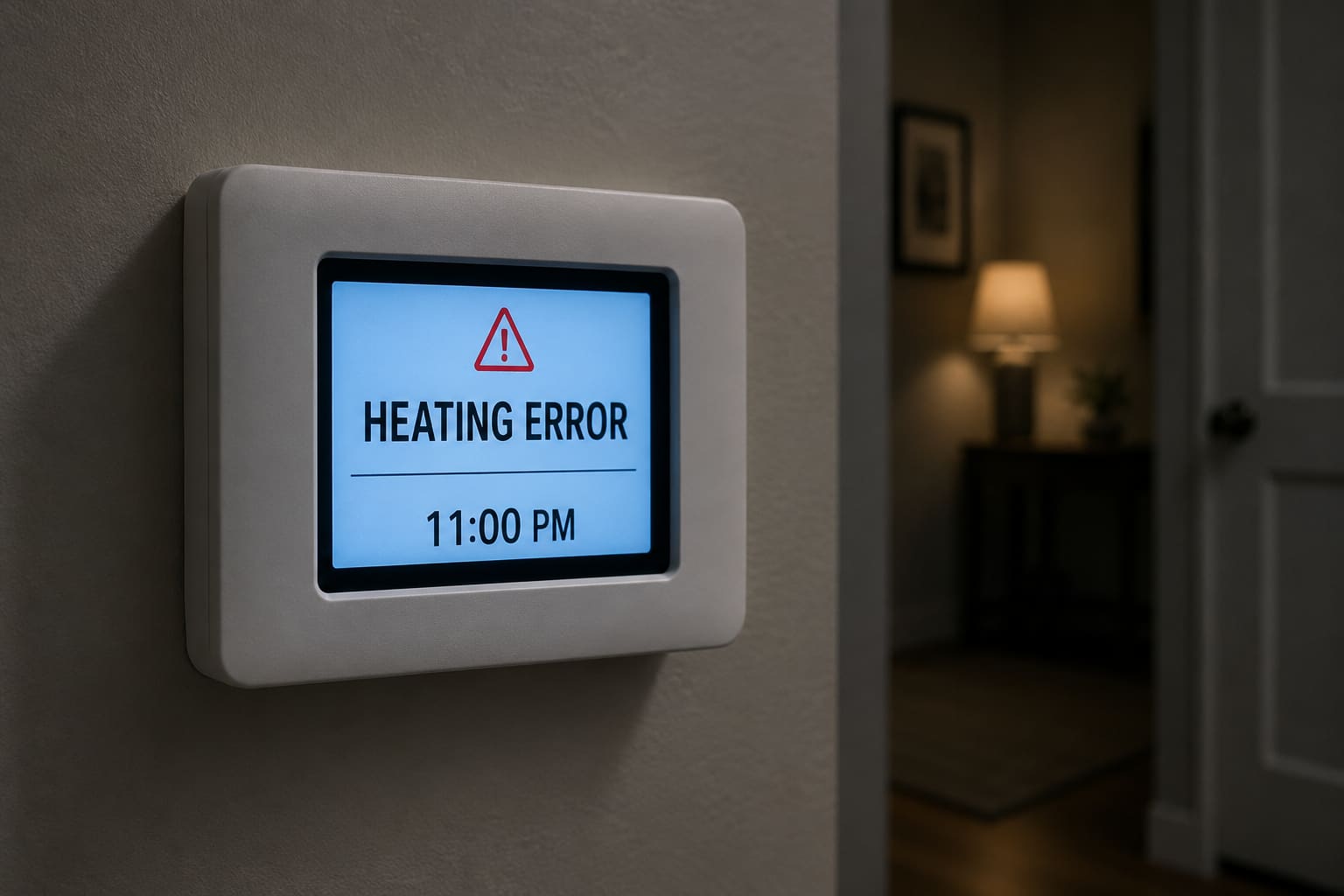
There's a predictable pattern to guest messages at a holiday let: a handful arrive during the day, and then a second, more urgent-sounding wave arrives between 9pm and midnight, usually starting with "sorry to bother you" and usually about something that has a simple answer. The heating isn't working. The Wi-Fi password isn't accepted. They can't find the recycling bins before an early checkout.
None of these are emergencies. All of them feel like one at 11pm to a guest standing in an unfamiliar kitchen. Here's a practical checklist for cutting the volume down, roughly in order of impact.
1. Fix the heating and hot water instructions first
Heating and hot water generate more late-evening messages than everything else combined, mostly because every system is slightly different and guests assume theirs works the way their own boiler at home does. If your thermostat needs a specific sequence — turn up past the target and back down, hold a button for three seconds, ignore a light that looks like it should mean something — write that exact sequence down, word for word, rather than a general description. "Adjust the thermostat as needed" has never once stopped a message being sent.
2. Put the Wi-Fi details somewhere guests will actually see them arriving
Not in a folder on a shelf — on the table, on the fridge, or (better) somewhere the guest can reach it from their own phone before they've even found the folder. A surprising number of "Wi-Fi isn't working" messages turn out to be a guest who never found the password at all.
3. Say the actual checkout steps, not just the time
"Checkout is 10am" invites a message asking what checkout actually involves. "Checkout is 10am — please strip the beds, put used towels in the bath, and pop the key back in the lockbox" doesn't. Guests aren't being difficult; they genuinely don't know what's expected unless you tell them.
4. Answer the "is it OK if" questions before they're asked
A lot of late messages aren't really about confusion — they're guests checking they won't be told off. Can we use the log burner? Is the hot tub included or extra? Are the garden chairs OK to move? A short "house rules" section that covers the common ones removes the need to ask.
5. Make local recommendations easy to find without a message
"Is there anywhere good to eat that's still open" is one of the most common evening messages there is, usually sent by guests who are hungry, tired, and didn't think to look this up before they arrived. A short, honest list of nearby options — plus a nudge to double-check opening hours, since those change — heads a lot of this off.
6. Give guests a way to help themselves before they message you
The common thread through all of the above is that guests will always default to messaging the host when they can't find an answer fast enough — not because they want to bother you, but because it's the quickest route to a reply. If there's a faster route to the same answer, most guests will take it instead.
That's the gap Cotswold Host is built to close: a private AI assistant for the property, reachable by scanning a QR code, that can answer the Wi-Fi, heating, checkout and local questions instantly, in the guest's own language, at any hour — and if it genuinely can't help, it tells the guest to call you directly rather than leaving them guessing. It doesn't remove every message. It removes the ones that had an answer sitting in a folder nobody opened.
Start with the heating instructions and the checkout steps — those two alone tend to account for the largest share of late-evening messages — and work down the list from there.
Curious what Cotswold Host would look like for your own property?
Book a free trial